Pests & Diseases
There are three particular problems to look out for:
1. Brevipalpus oncidii
This is a mite belonging to the Tenuipalpidae family and are commonly known as false spider mites. They affect the plants by inserting their mouth-parts into cells and sucking out their contents. This causes direct damage. In addition, their saliva is toxic to the plants. They also can carry and transmit viruses to the plants. The mite is tiny - approximately 0.3 mm long, orange-red in colour and oval shaped in outline. Their eggs are also orange-red in colour. Here are highly magnified images of both:
1. Brevipalpus oncidii
This is a mite belonging to the Tenuipalpidae family and are commonly known as false spider mites. They affect the plants by inserting their mouth-parts into cells and sucking out their contents. This causes direct damage. In addition, their saliva is toxic to the plants. They also can carry and transmit viruses to the plants. The mite is tiny - approximately 0.3 mm long, orange-red in colour and oval shaped in outline. Their eggs are also orange-red in colour. Here are highly magnified images of both:
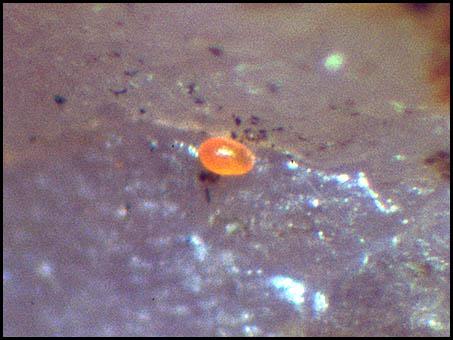
Egg of Brevipalpus oncidii highly magnified
|
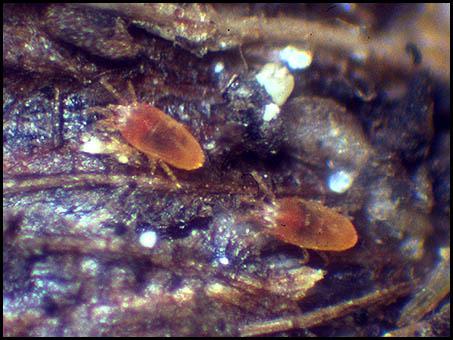
Brevipalpus oncidii adult mites
|
They can just about be seen using a x10 hand lens if you know what you are looking for. The adults may be found on any part of the plant but favour the pseudobulb. Eggs may be laid anywhere on the plant but they have a particular preference for laying them in the small depression on top of the bulb that is left once the leaf has fallen off. Here is a picture (again highly magnified) looking straight down on top of a pseudobulb with some Brevipalpus eggs laid in this area:
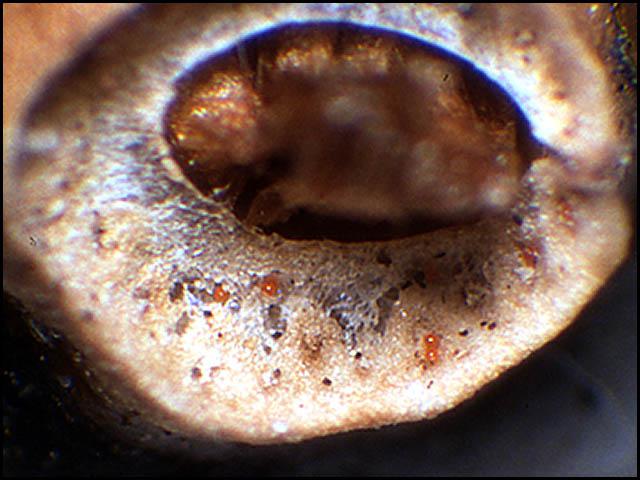
Brevipalpus eggs laid on top of a Pleione pseudobulb
Symptoms: In a bad infestation the direct damage to the pseudobulbs can be severe. Brown areas appear where all the cells have had their contents emptied. Here are some typical examples:
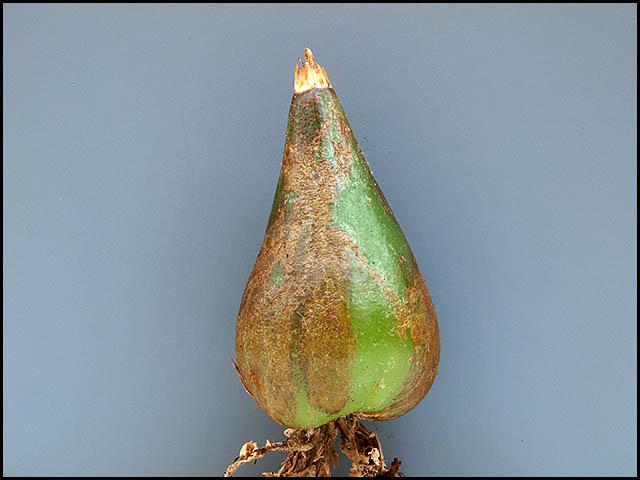
Damage caused by Brevipalpus oncidii on Pleione
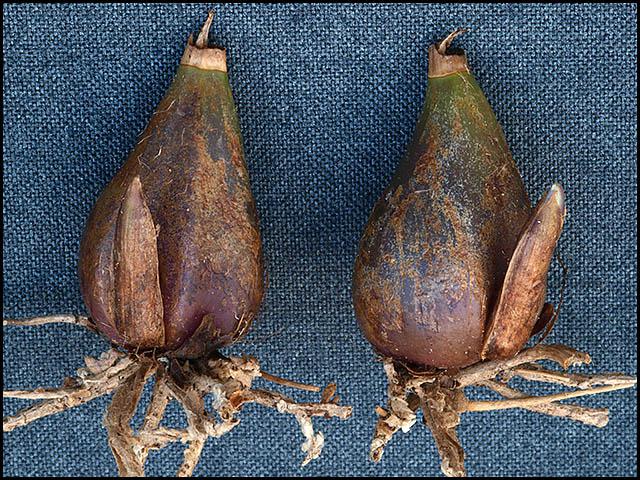
Brevipalpus oncidii damage to Pleione pseudobulbs
Left untreated, the mites will cause the pseudobulbs to grow poorly. Slowly, sometimes over several years, the pseudobulbs will lose vigour, get smaller and eventually die. However, long before their numbers are large enough to cause direct damage to become visible, the mites can transmit viruses to the plants. (Viruses are the second major problem that affect Pleione, examined below).
Treatments for Brevipalpus
What treatments are available to you will depend on where in the world you live and your local regulations. In the U.K., chemical products containing refined oils are effective. These work by blocking the breathing pores (spiracles) of the mites and so suffocating them. Professionals will use products such as Croptex Spraying Oil , but this is unobtainable by amateurs. The Royal Horticultural Society has a very useful and regularly updated list of all Pesticides for Home Gardeners in the U.K. It currently lists the following products containing oils that may be useful against Brevipalpus:
♦ Growing Success Winter Tree Wash
♦ Vitax Winter Tree Wash (also contains fish oils)
♦ Vitax Organic 2 in 1 Pest & Disease Control Concentrate (also contains fish oils)
♦ Agralan Whitefly Killer (also contains seaweed extracts)
♦ Bug Clear for Fruit & Veg – marketed by Scotts
♦ Vitax Organic 2 in 1 Pest & Disease Control (also contains fish oils)
Also available, with a similar mode of action are:
♦ SB Plant Invigorator ready to use
♦ SB Plant Invigorator retail concentrate
Products based on fatty acids may also be effective, though I have not tried these myself. Currently available products in the U.K. containing these are:
♦ Bayer Organic Bug Free
♦ Bayer Natria Bug Control
♦ Doff Greenfly and Blackfly Killer
♦ Doff Universal Bug Killer
♦ Just Green Savona Concentrate
♦ Nature's Answer Natural Fungus and Bug Killer (with sulphur*) – marketed by Scotts
Other treatments known to be effective but not legal in the U.K. (but perhaps may be in other countries - check your own regulations) include:
♦ Neem Oil. A reasonable rate is to use 30 ml of Neem per gallon of water (= about 6 ml per litre). (If the Neem is almost solid, you can liquefy it first by putting the bottle in warm water.). Add a few drops of detergent and mix vigorously. This emulsifies the Neem. Use straight away, shaking or stirring regularly (If you leave it or don't shake, the Neem may separate out).
♦ Products containing Bifenthrin: Effective against the adults but not the eggs, so repeat sprayings at about three-week intervals are required to kill newly hatched eggs.
What treatments are available to you will depend on where in the world you live and your local regulations. In the U.K., chemical products containing refined oils are effective. These work by blocking the breathing pores (spiracles) of the mites and so suffocating them. Professionals will use products such as Croptex Spraying Oil , but this is unobtainable by amateurs. The Royal Horticultural Society has a very useful and regularly updated list of all Pesticides for Home Gardeners in the U.K. It currently lists the following products containing oils that may be useful against Brevipalpus:
♦ Growing Success Winter Tree Wash
♦ Vitax Winter Tree Wash (also contains fish oils)
♦ Vitax Organic 2 in 1 Pest & Disease Control Concentrate (also contains fish oils)
♦ Agralan Whitefly Killer (also contains seaweed extracts)
♦ Bug Clear for Fruit & Veg – marketed by Scotts
♦ Vitax Organic 2 in 1 Pest & Disease Control (also contains fish oils)
Also available, with a similar mode of action are:
♦ SB Plant Invigorator ready to use
♦ SB Plant Invigorator retail concentrate
Products based on fatty acids may also be effective, though I have not tried these myself. Currently available products in the U.K. containing these are:
♦ Bayer Organic Bug Free
♦ Bayer Natria Bug Control
♦ Doff Greenfly and Blackfly Killer
♦ Doff Universal Bug Killer
♦ Just Green Savona Concentrate
♦ Nature's Answer Natural Fungus and Bug Killer (with sulphur*) – marketed by Scotts
Other treatments known to be effective but not legal in the U.K. (but perhaps may be in other countries - check your own regulations) include:
♦ Neem Oil. A reasonable rate is to use 30 ml of Neem per gallon of water (= about 6 ml per litre). (If the Neem is almost solid, you can liquefy it first by putting the bottle in warm water.). Add a few drops of detergent and mix vigorously. This emulsifies the Neem. Use straight away, shaking or stirring regularly (If you leave it or don't shake, the Neem may separate out).
♦ Products containing Bifenthrin: Effective against the adults but not the eggs, so repeat sprayings at about three-week intervals are required to kill newly hatched eggs.
2. Viruses
Pleiones are susceptible to viruses, mainly transmitted in cultivation by Brevipalpus oncidii mites. There has not been much research on Pleione viruses, but one that has been identified is known as Pleione virus Y and belongs to the genus Potyvirus. There is almost certainly a range of other viruses which also affect Pleione. Karel Tybl had some ELISA tests and electron-microscopy done at the Crop Research Institute Prague, Czech Republic, Department of Virology. In several Pleione they found either filamentous viruses, with particles length from 430 to 3300 nm or spherical viruses of 55 nm. Here is one of Karel's pictures of a filamentous type virus from a Pleione:
Pleiones are susceptible to viruses, mainly transmitted in cultivation by Brevipalpus oncidii mites. There has not been much research on Pleione viruses, but one that has been identified is known as Pleione virus Y and belongs to the genus Potyvirus. There is almost certainly a range of other viruses which also affect Pleione. Karel Tybl had some ELISA tests and electron-microscopy done at the Crop Research Institute Prague, Czech Republic, Department of Virology. In several Pleione they found either filamentous viruses, with particles length from 430 to 3300 nm or spherical viruses of 55 nm. Here is one of Karel's pictures of a filamentous type virus from a Pleione:
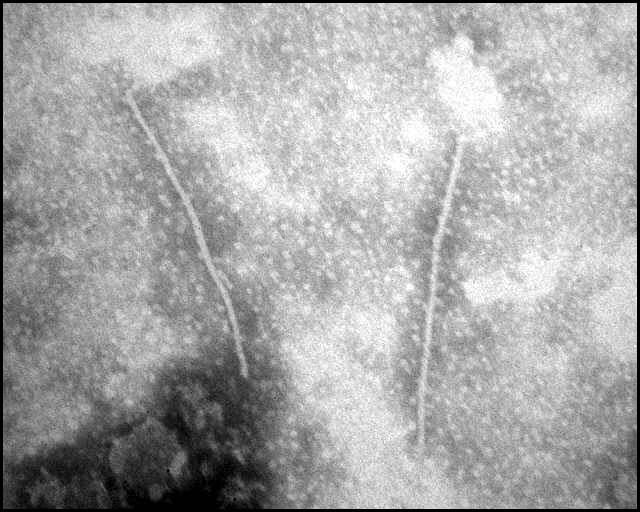
Electron microscope picture of filamentous virus from Pleione. © Karel Tybl
There are no treatments available which will cure the problem and it is better to throw infected bulbs away than risk the virus being spread to the rest of your collection. Symptoms to look out for on the leaves include streaks and speckles and they may also be twisted and deformed. Here are some pictures of leaves with suspected virus infection:
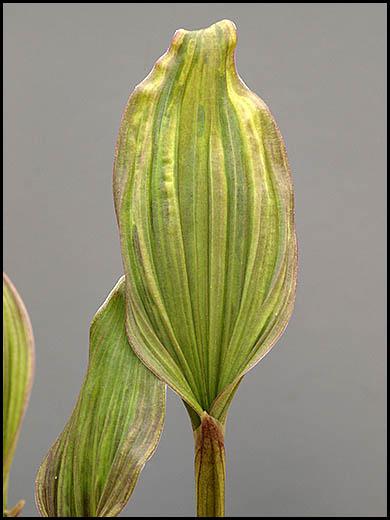
Suspected virus infection of Pleione leaves
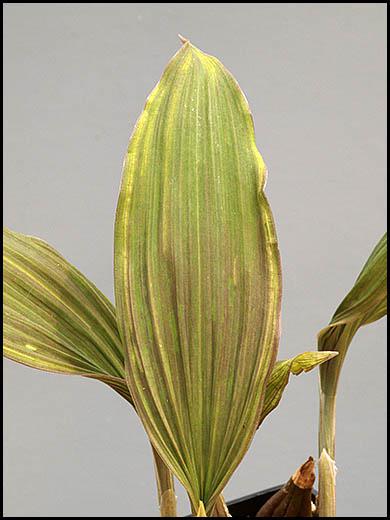
Suspected virus infection of Pleione leaves
|
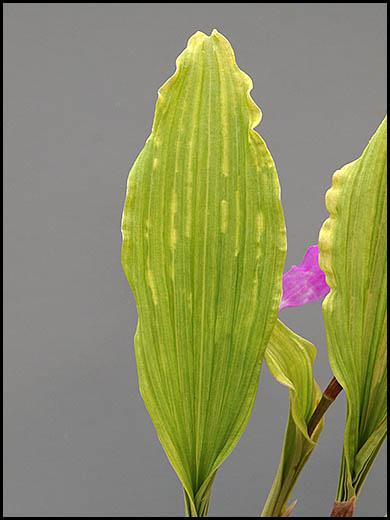
Suspected virus infection of Pleione leaves
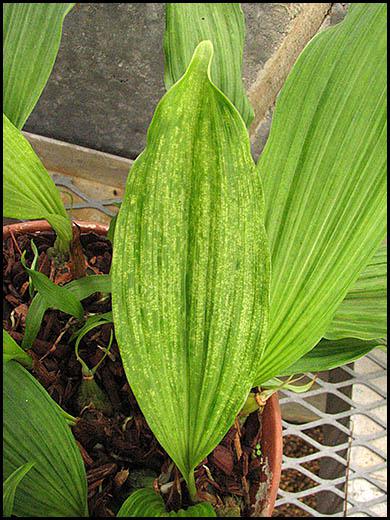
Suspected virus infection of Pleione leaves
|
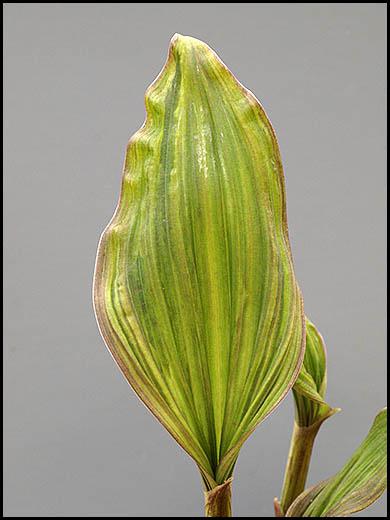
Suspected virus infection of Pleione leaves
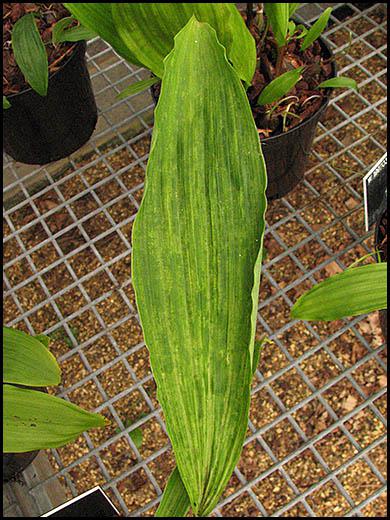
Suspected virus infection of Pleione leaves
|
Virus infection shows on the flowers as streaks and/or colour breaks and again they also may be malformed or mis-shapen. Here are some suspected examples:
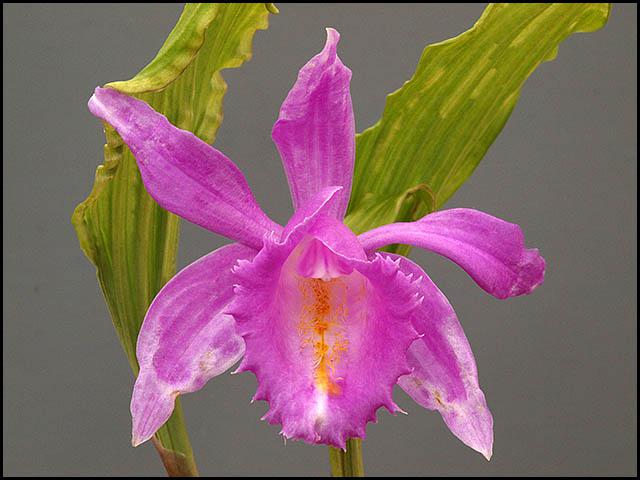
Suspected virus infection of Pleione
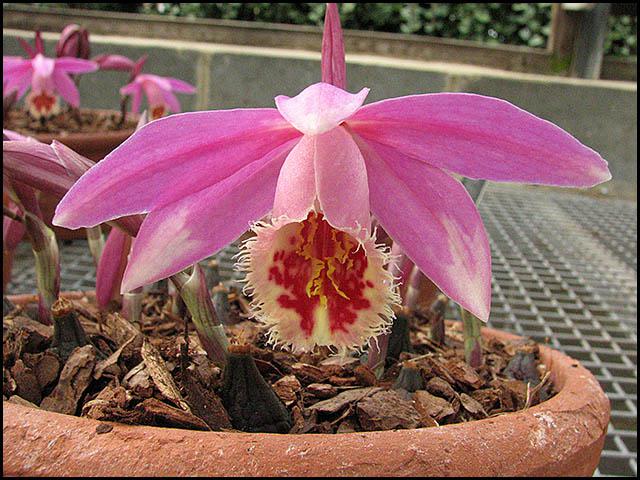
Suspected virus infection of Pleione
|
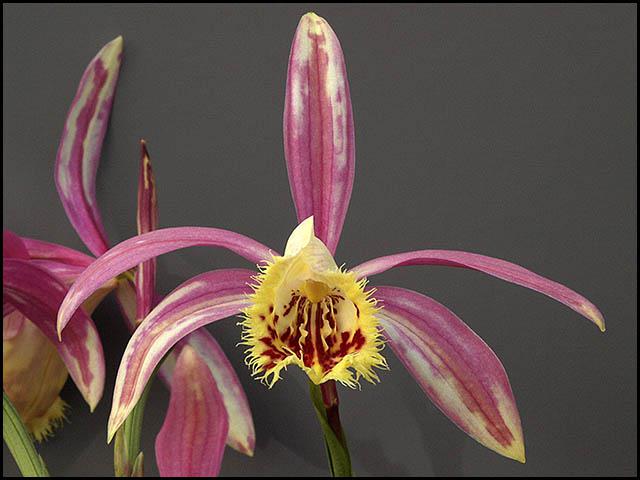
Suspected virus infection of Pleione
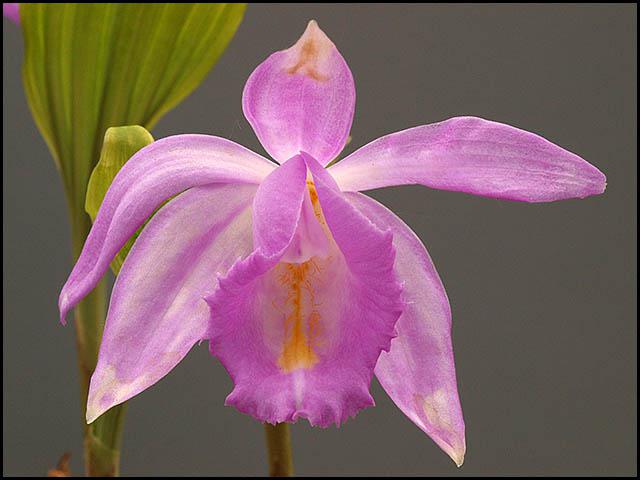
Suspected virus infection of Pleione
|
3. Colletotrichum gloeosporioides disease
This disease is one of a group of diseases known as anthracnoses. It is common on a wide range of plants, including Pleione .
Symptoms: On the pseudobulbs it starts as small black dots that grow in size and eventually eat into the tissue causing sunken areas. For this reason Pleione growers commonly call this disease "Black Pit" but this is not an officially recognised name.
This picture shows a severe example of it on some pseudobulbs:
This disease is one of a group of diseases known as anthracnoses. It is common on a wide range of plants, including Pleione .
Symptoms: On the pseudobulbs it starts as small black dots that grow in size and eventually eat into the tissue causing sunken areas. For this reason Pleione growers commonly call this disease "Black Pit" but this is not an officially recognised name.
This picture shows a severe example of it on some pseudobulbs:
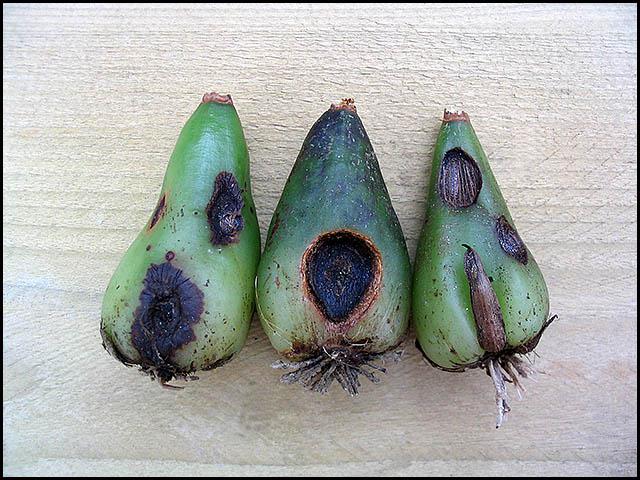
Colletotrichum gloeosporioides on Pleione pseudobulbs
On the leaves it appears as brown patches that often show a pattern of concentric rings. The brown areas may turn black over time.
The disease spreads by spores which can be carried in splashes of water from one plant to the next. A whole collection can easily become infected by this route.
Treatments for Colletotrichum
The most effective treatment is a fungicide called chlorothalonil but this is only available to professionals in products such as Bravo 500 . For amateurs, products containing Myclobutanil are the only available treatment. Again the RHS has a list of Fungicides for Home Gardeners that lists these products as currently available in the U.K. :
♦ Liquid Concentrates: Systhane Fungus Fighter (Bayer Garden)
♦ Ready-to-Use Sprays: Fungus Fighter Disease Control (Bayer Garden). Only for use on ornamental plants.
♦ Systemic Fungus Control (Doff). Only for use on ornamental plants.
♦ Multirose2 Bugkiller and Disease Control (Bayer Garden). With cypermethrin for insect control. Only for use on ornamental plants.
♦ Rose Rescue (Westland). With cypermethrin for insect control. Only for use on ornamental plants.
♦ Rose Shield Bug & Disease Killer (Doff). With cypermethrin for insect control. Only for use on ornamental plants.
The disease spreads by spores which can be carried in splashes of water from one plant to the next. A whole collection can easily become infected by this route.
Treatments for Colletotrichum
The most effective treatment is a fungicide called chlorothalonil but this is only available to professionals in products such as Bravo 500 . For amateurs, products containing Myclobutanil are the only available treatment. Again the RHS has a list of Fungicides for Home Gardeners that lists these products as currently available in the U.K. :
♦ Liquid Concentrates: Systhane Fungus Fighter (Bayer Garden)
♦ Ready-to-Use Sprays: Fungus Fighter Disease Control (Bayer Garden). Only for use on ornamental plants.
♦ Systemic Fungus Control (Doff). Only for use on ornamental plants.
♦ Multirose2 Bugkiller and Disease Control (Bayer Garden). With cypermethrin for insect control. Only for use on ornamental plants.
♦ Rose Rescue (Westland). With cypermethrin for insect control. Only for use on ornamental plants.
♦ Rose Shield Bug & Disease Killer (Doff). With cypermethrin for insect control. Only for use on ornamental plants.
In addition to the three major problems given above, Pleione may also suffer from other common pest problems such as aphids, mealybugs, slugs and snails and the like. Any treatments aimed at these pests may be applied to Peione - they seem to tolerate most chemicals very well with no signs of phytotoxicity. Mice can be a real pain - they will take and eat pseudobulbs and seem to have an uncanny attraction to the rarest plants in your collection!
Another occasional problem is malformation of the flowers, where a flower may develop more than one lip like this:
Another occasional problem is malformation of the flowers, where a flower may develop more than one lip like this:
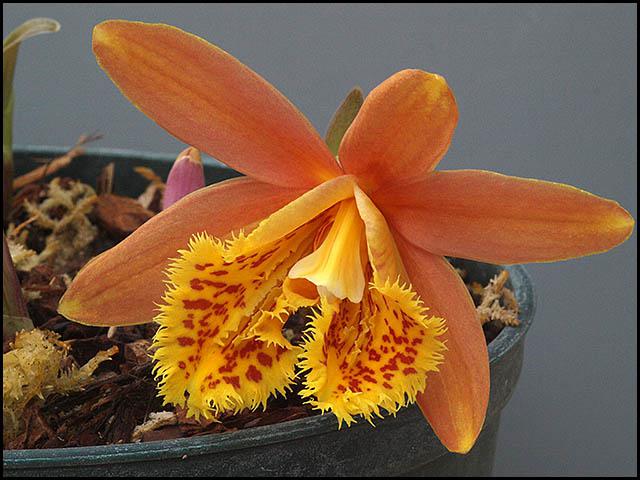
Pleione Suswa 'Golden Eagle' showing a double lip malformation
This may happen to any flower in one year but it usually develops normally the next. Occasionally you get some clones that are more prone to this than others. and they throw such malformations more regularly. Other malformations sometimes happen such as flowers that are missing some of the petals or flowers where some of the petals are fused so that the flower cannot open properly. Again, some clones are more prone to this than others.
Bacteria can occasionally cause infection. Karel Tybl has kindly supplied these pictures of leaf symptoms followed by a photomicrograph image of a bacterium isolated from the infected leaf:
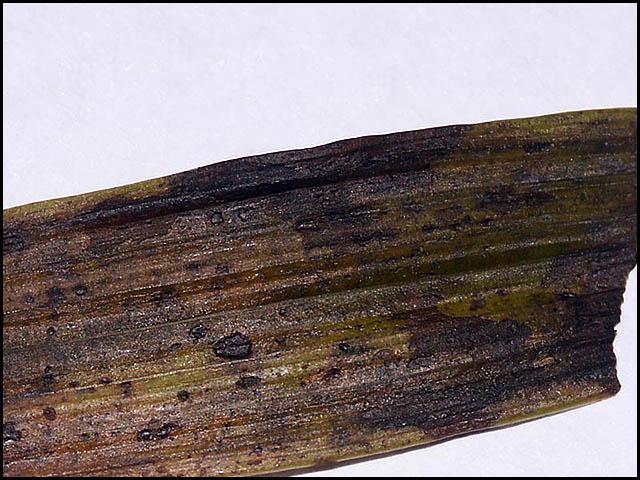
Bacterial infection of a leaf of Pleione scopulorum © Karel Tybl
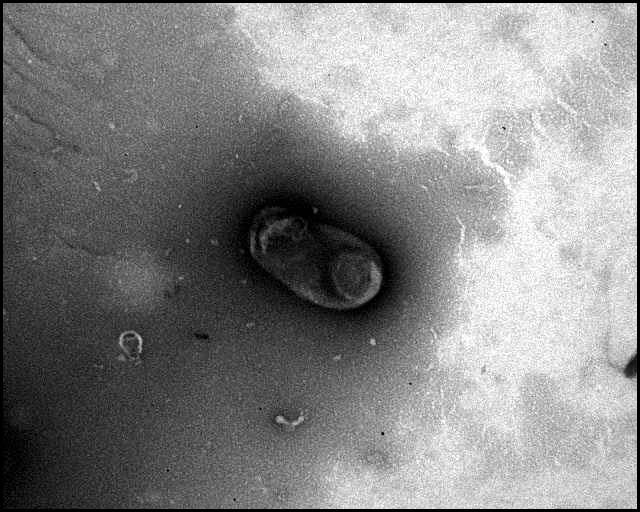
Bacterium isolated from an infected leaf of Pleione scopulorum © Karel Tybl